
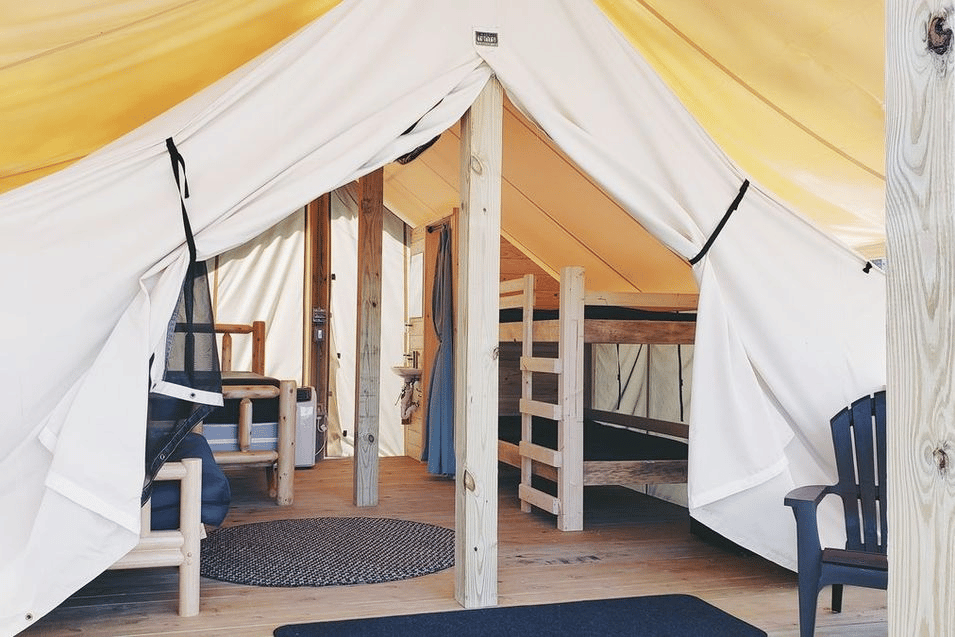
Why a canvas tent with a stove changes everything
A properly outfitted canvas wall tent with a wood stove is the difference between enduring winter and enjoying it. The heavy 10.10 oz duck canvas holds heat, dries gear overnight, and turns a hunting or basecamp trip into a genuinely comfortable stay — even at 10°F.
Choosing the right stove jack
Every Secret Creek canvas wall tent can be ordered with a factory-installed stove jack. We use high-temperature silicone-coated fiberglass rated to 1,000°F, sized to fit standard 4"–6" stovepipe. Get the size right the first time — retrofitting a jack in the field is a headache.
Stove sizing by tent size
- 10x12 wall tent: small cylinder stove (Cylinder Stoves LP, Riley, or similar).
- 12x14 wall tent: medium sheepherder or box stove.
- 14x16 and up: full-size outfitter stove with a warming shelf and water jacket.
Floor protection and safety
Always set the stove on a fireproof pad or sand — never directly on the sod cloth. Keep 18" clearance from canvas walls and use a spark arrestor on the pipe. Crack a window opposite the stove for cross-ventilation and CO safety.
Setting up the stovepipe
Run pipe straight up through the jack with at least 24" of pipe above the peak to draw properly. Guy the pipe if it's tall; wind on a ridge will otherwise rock it all night.
Why canvas beats nylon in winter
Canvas breathes, so moisture from your stove, cooking, and breathing escapes instead of raining condensation back on your sleeping bag. Nylon hot tents fight you all night. This is why elk outfitters, wall-tent hunters, and Rocky Mountain glamping operators have used canvas for a century.
Ready to build one?
Every Secret Creek canvas wall tent is cut and sewn in Montrose, Colorado. Configure your size, stove jack, and windows in the tent builder.